Cathodic Protection Equipment

Persian

Transformer Rectifiers

Transformer Rectifiers (TRs)

In impressed current systems, power is supplied from an external AC source and converted to DC. The most common industrial units are custom-built transformer rectifiers manufactured to client specifications. A wide range of TRs is designed and manufactured for CP systems on buried structures and in marine environments, in accordance with national and international standards. TR types by control method:

  • Electronic control via dual-mode board (constant current/voltage)
  • Smart control via tri-mode board (constant current/voltage/potential)
  • Regulated control with variac before main transformer (constant voltage)
  • Smart-regulated (combo, tri-mode)
  • Electronic-regulated (combo, dual-mode)
  • 63-step control (historical oil industry use, constant voltage)
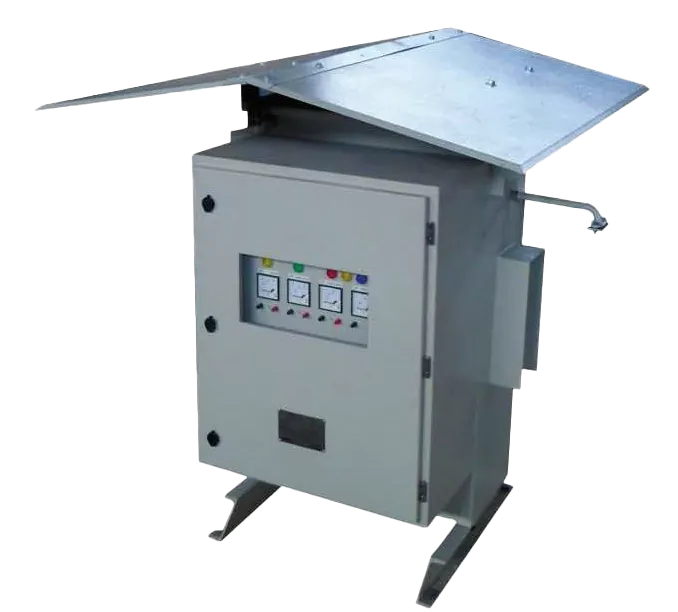
Transformer Rectifiers

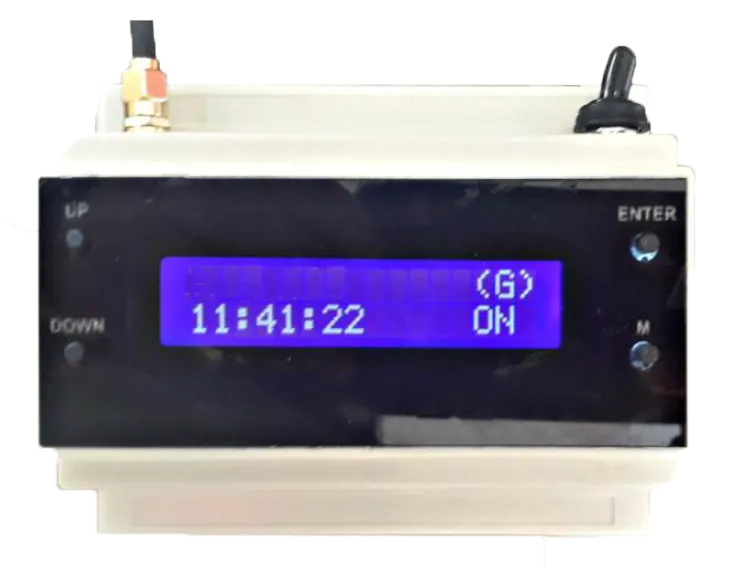
GPS interrupter

For CP systems with multiple TRs, all units must interrupt simultaneously, with millisecond precision, to allow accurate instant-off potential measurement. GPS interrupters provide synchronized interruption; each unit includes a GPS module, active antenna, microcontroller, and electronics synchronized to global time.

GPS interrupter

Remote Monitoring & Control Unit (RMCU)

RMCUs are used for remote control, monitoring, and data logging of CP systems.
Applications include pipelines, petrochemical and refinery plants, docks, tanks, and oil terminals.

Features:

  • Measures TR output voltage/current (DC)
  • Logs pipe-to-soil potential vs. reference electrode
  • Monitors TR temperature
  • Detects current loss, overload, and voltage fluctuations
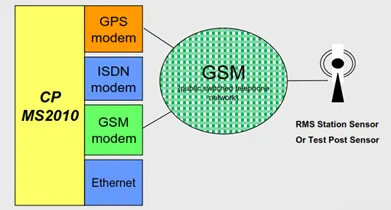
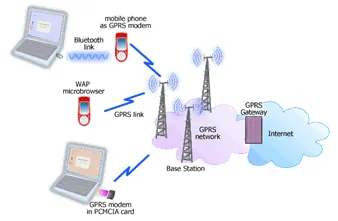
  • Connectivity: GSM/GPRS modem, radio, fiber optic
  • Remote voltage/current adjustment
  • Data storage: internal or cloud
  • SCADA integration
  • Potential monitoring parameters (on/off times)
  • TR temperature/oil monitoring for timely maintenance
RMCU1 RMCU2

Anodes

Impressed Current Anodes

High-silicon cast iron anodes are commonly used in impressed current CP systems. They are produced in accordance with ASTM A518 with silicon and chromium; oxide formation enhances corrosion resistance and service life.

silicon Iron anode

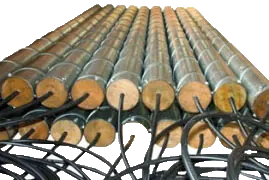
MMO-coated titanium anodes are increasingly used because of their low consumption rate (less than 1 mg/A-year) and higher current output compared with cast iron. A thin layer of metal oxides (Ti, Ir, Ru, Ta) is applied to a titanium substrate, which can be formed into various shapes. These anodes are inspected in accordance with NACE TM0108.

MMO Tubular Anodes

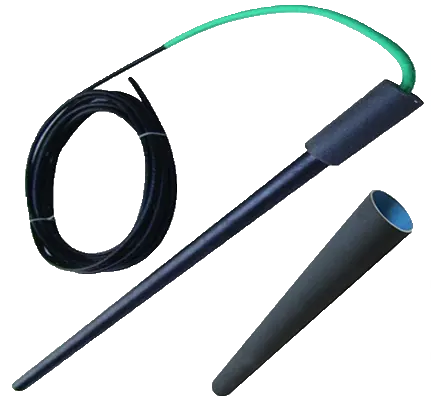
These anodes are used for buried and immersed structures, including deep wells, distributed beds, and horizontal or vertical surface ground beds. Common sizes include 25x1000 mm and 25x500 mm.

MMO Tubular Anode

MMO Ribbon Anode

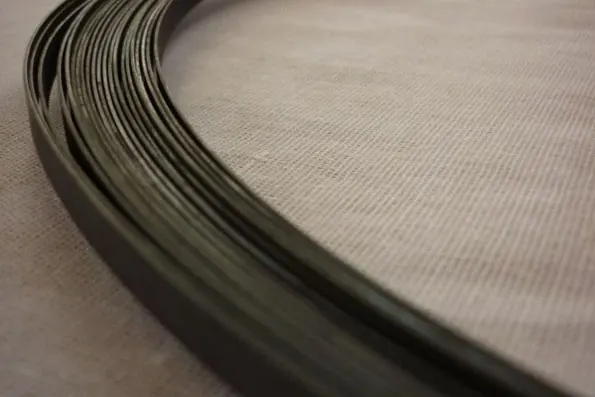
For tank bottoms or reinforced concrete rebar protection. Titanium per ASTM B265 Grade 1/2. Dimensions/current density:

Dimensions and Current Density for MMO Ribbon Anode

Status Configuration
6.35 mm (0.25 in) Width
0.635 mm (0.025 in) Thickness
42 mA/m (12.8 mA/ft) Maximum Current Density in Fine Sand
1.5 mA/m (0.45 mA/ft) Maximum Current Density in Concrete
image/MMO Ribbon Anode

MMO Wire Anode

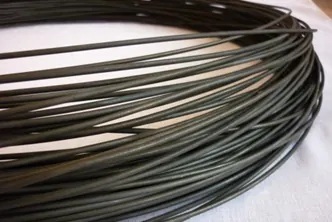
For uniform current distribution along buried pipelines, parallel to pipe.

mm anode wire

Sacrificial Magnesium Anodes

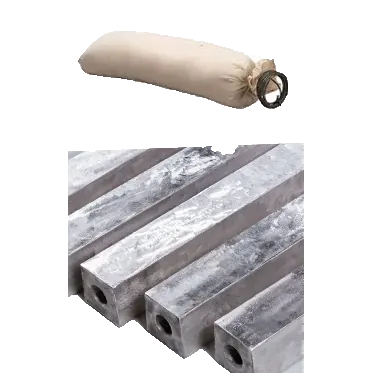
Magnesium is an active metal used to protect buried and immersed steel structures. Standard (AZ63) and high-potential (M1C) types are supplied in accordance with IPS-M-TP-750. These anodes are used with backfill for soil-buried structures and can also be used in water heaters, heat exchangers, and condensers at elevated temperatures. Their higher potential relative to steel allows use in higher-resistivity soils.

mg anode

Sacrificial Zinc Anodes

Zinc anodes are used for buried and immersed structures, seawater lines, tank bottoms, and ships. Two types are specified in IPS-M-TP-750. They are not suitable for environments above 30 ohm-m resistivity or above 50 deg C, where a passive layer can form, reverse polarity, and accelerate steel corrosion.

Zn anode

Sacrificial Aluminum Anodes

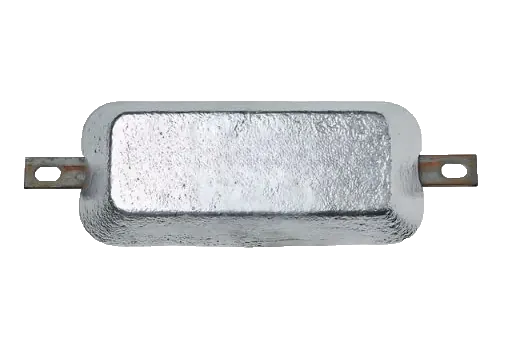
Aluminum anodes have low consumption and are well suited for seawater and seabed structures. They are alloyed with elements such as indium to reduce the protective oxide layer and improve performance.

Al anode

Junction Boxes

Bond Boxes

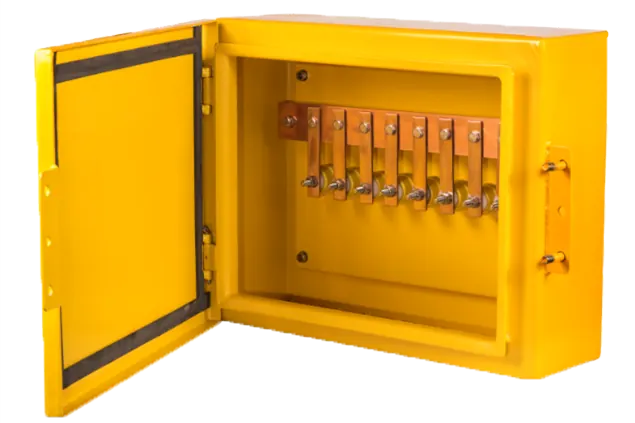
Bond boxes collect structure and anode cables before connection to the TR. They can be supplied in custom materials such as carbon steel or stainless steel, with suitable sizes, brackets, and galvanized supports. IP54/IP55 protection, shunts, copper links or terminals, and variable resistors for current control can be provided as required.

Bond box

Test Point Markers

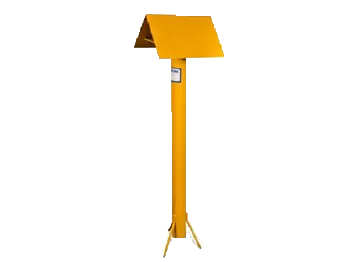
For pipe-to-soil potential and pipeline route marking.

test point marker

Polycarbonate Test Point Markers

Applications:

  • Installed as access points to measure pipe or structure potential and test CP current flow.
  • Allows technicians to perform routine potential measurements without excavation.
  • Enables verification of CP system performance and effectiveness
  • Usually designed to be mounted on buried pipelines, tanks, or concrete pads.

Characteristics:

  • High-impact resistance: resists mechanical shocks and impacts.
  • UV stabilized: withstands prolonged exposure to sunlight without degrading or discoloring.
  • Lightweight compared to metal alternatives.
  • Multiple terminal points allow connection for testing voltage, current, or potential in CP systems
test point marker

Isolation Equipment

Solid Polarization Cell (PCR)

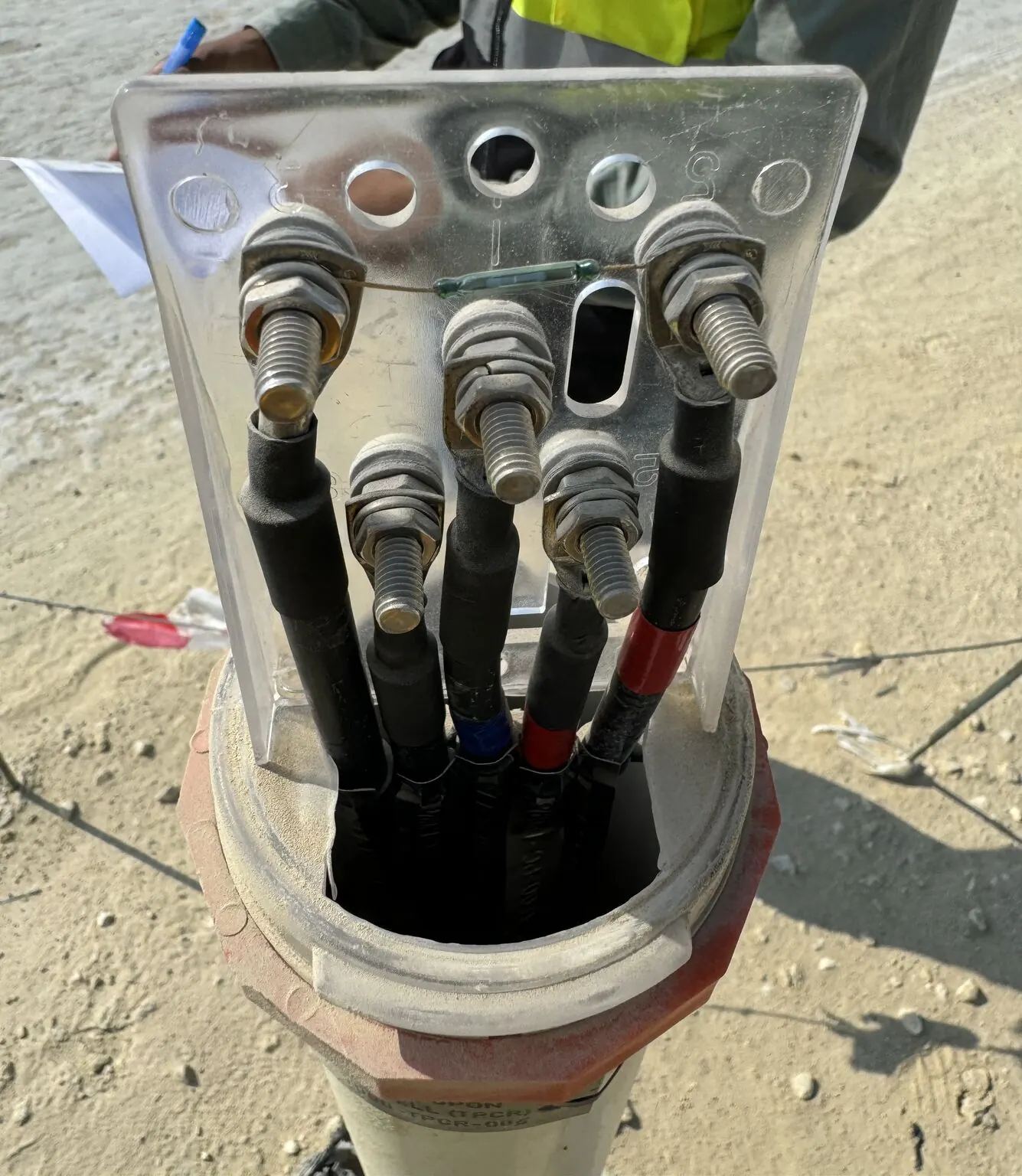
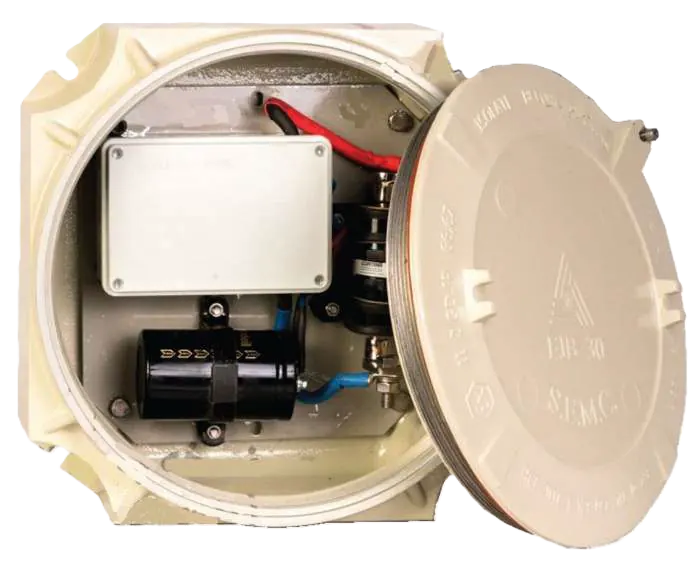
Blocks cathodic protection DC current while allowing AC, short-circuit, lightning, and induced currents to pass to ground. The unit uses semiconductors, capacitors, and a spark gap, and is used for indirect grounding or AC mitigation on pipelines.

Solid polarization cell

Spark Gap

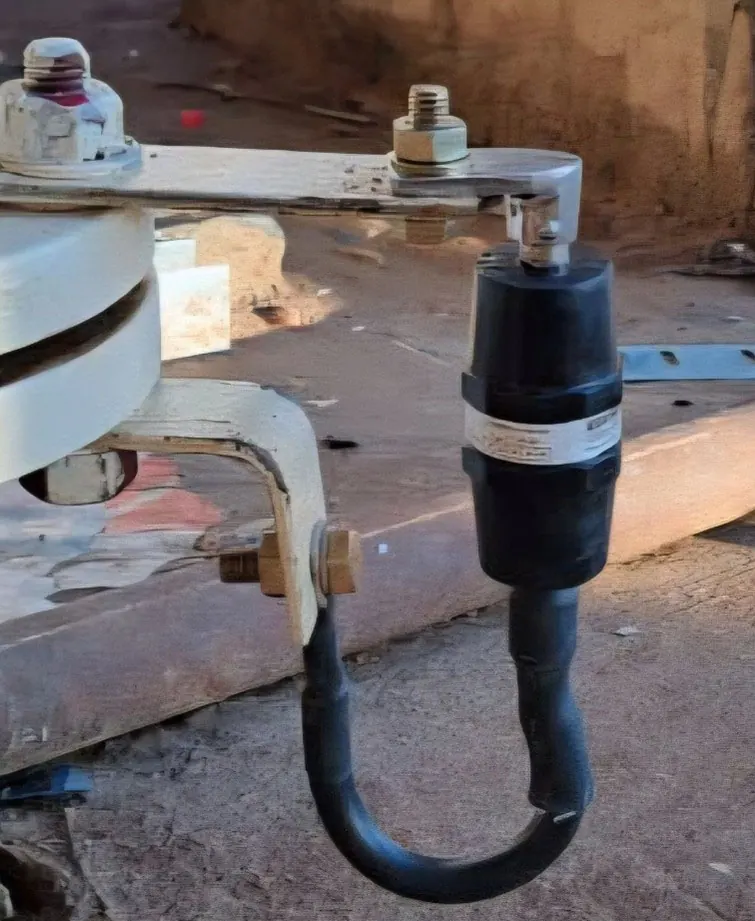
A spark gap consists of two copper electrodes facing each other with a very small gap inside a chamber. Under normal conditions, the electrodes are isolated and no current flows through them. When lightning or a surge occurs on one side, the voltage between the electrodes increases, ionizing the gas inside the chamber and establishing an electrical connection between the electrodes. Spark gaps are used for indirect connection to the grounding system and for protecting equipment against lightning currents.
Common applications of spark gaps:

  • Protection of insulating joints (insulating flange kits) against damage caused by high currents or voltages.
  • Protection of personnel against injuries caused by fault currents and lightning.
Spark Gap

Flange Insulation Kits

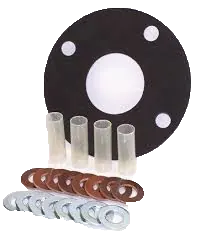
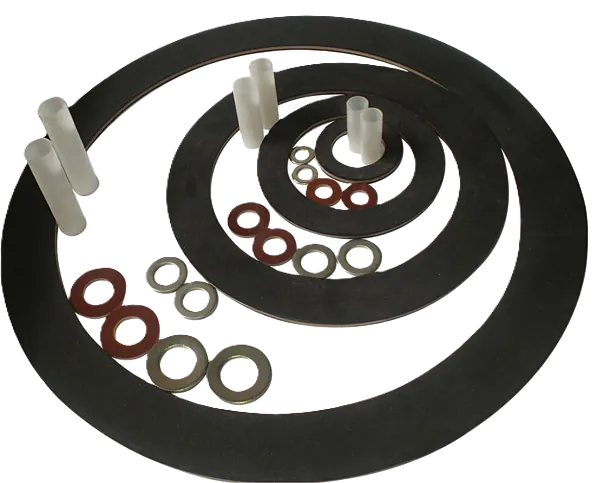
Flange insulation kits prevent CP current leakage at underground-to-aboveground transitions. These kits consist of a center gasket, sleeves, and insulating and steel washers. Common types include Type E (full face) and Type F (raised face), supplied in accordance with ANSI B16.21/B16.20 and IPS-M-TP-750.

Insulation kit Insulation kit

Test & Measurement Equipment

Monitoring Equipment

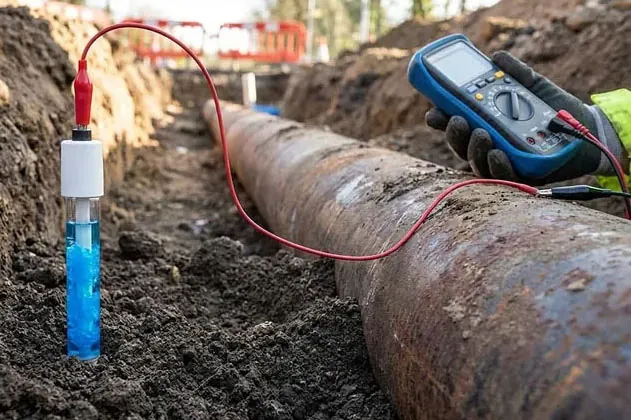
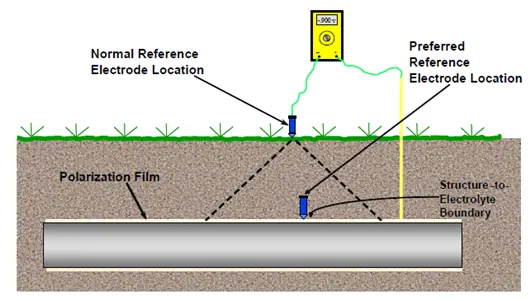
Measuring structure-to-soil or structure-to-water potential is the primary criterion for CP system performance. Reference electrodes, test boxes, and test point markers are used for evaluation.

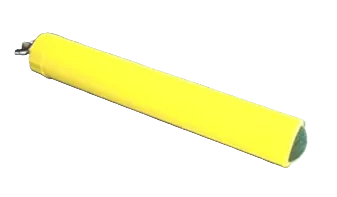
Reference electrode

Test Boxes / Test Points

During CP system operation and monitoring, periodic structure-to-electrolyte potential measurements and data logging are required. Test boxes installed near protected metal structures collect test and reference cables. Portable reference electrodes are used when fixed electrodes are not available.

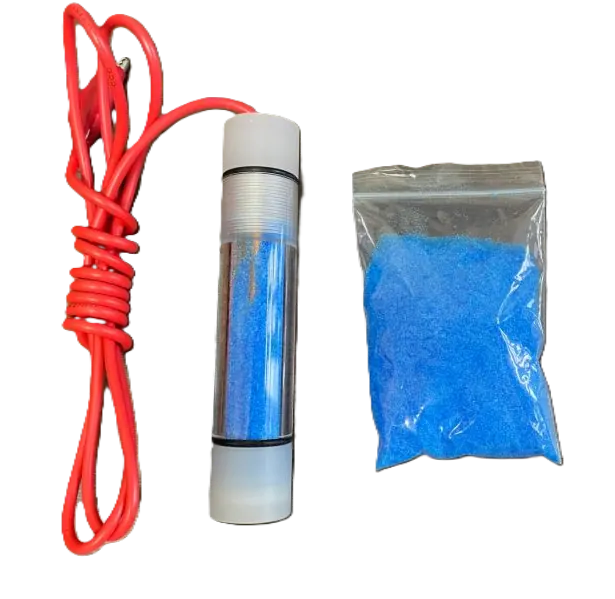
cu cuso4 ref elec.

Copper/Copper Sulfate Reference Electrode (Cu/CuSO4)

This is the most common reference electrode for soil-buried CP assessments and is available in fixed and portable types. A high-purity copper rod is immersed in saturated CuSO4 solution, and the large surface area helps prevent polarization. Fixed electrodes are installed in backfill containing 75% gypsum, 20% bentonite, and 5% sodium sulfate, and are placed along pipelines or under buried tanks.

cu cuso4 ref elec.

Silver/Silver Chloride Reference Electrode (Ag/AgCl)

This electrode is used in chloride-rich environments where Cu/CuSO4 electrodes are unsuitable. Silver equilibrates with the chloride solution, and both fixed and portable types are available. Portable electrodes should be soaked in seawater for several hours before use. They are used in marine and internal tank CP applications.

Ag Agcl ref elec.

Zinc Reference Electrode

Zinc reference electrodes provide high mechanical strength for external tank bottom plate potential measurements and are commonly supplied in rod or disc shapes.

Zn ref elec.

Cathodic Polarization Coupons

To minimize measurement error, the reference electrode should be positioned near coating defects. A PVC box with a bare structure sample encased in resin acts as a witness coupon. When connected to the CP system, the measured protection potential indicates the protection level of the structure. For multi-TR instant-off measurements without GPS interrupters, the coupon cable can be disconnected and the steel potential measured.

Polarization coupon

Accessories

Exothermic Welding Equipment

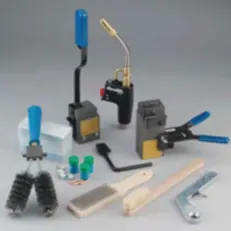
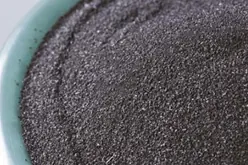
Cable-to-structure (cathode) connections can be made in several ways, and exothermic welding is a common method. The system includes a welding mold, welding powder, and cleaning tools such as a metal scraper, wire brush, and lighter. Molds are made from high-quality, low-porosity graphite. With proper technique, including preheating the mold and cleaning after each weld, one mold can provide at least 50 connections.

Exothermic welding equipment

Pin Brazing

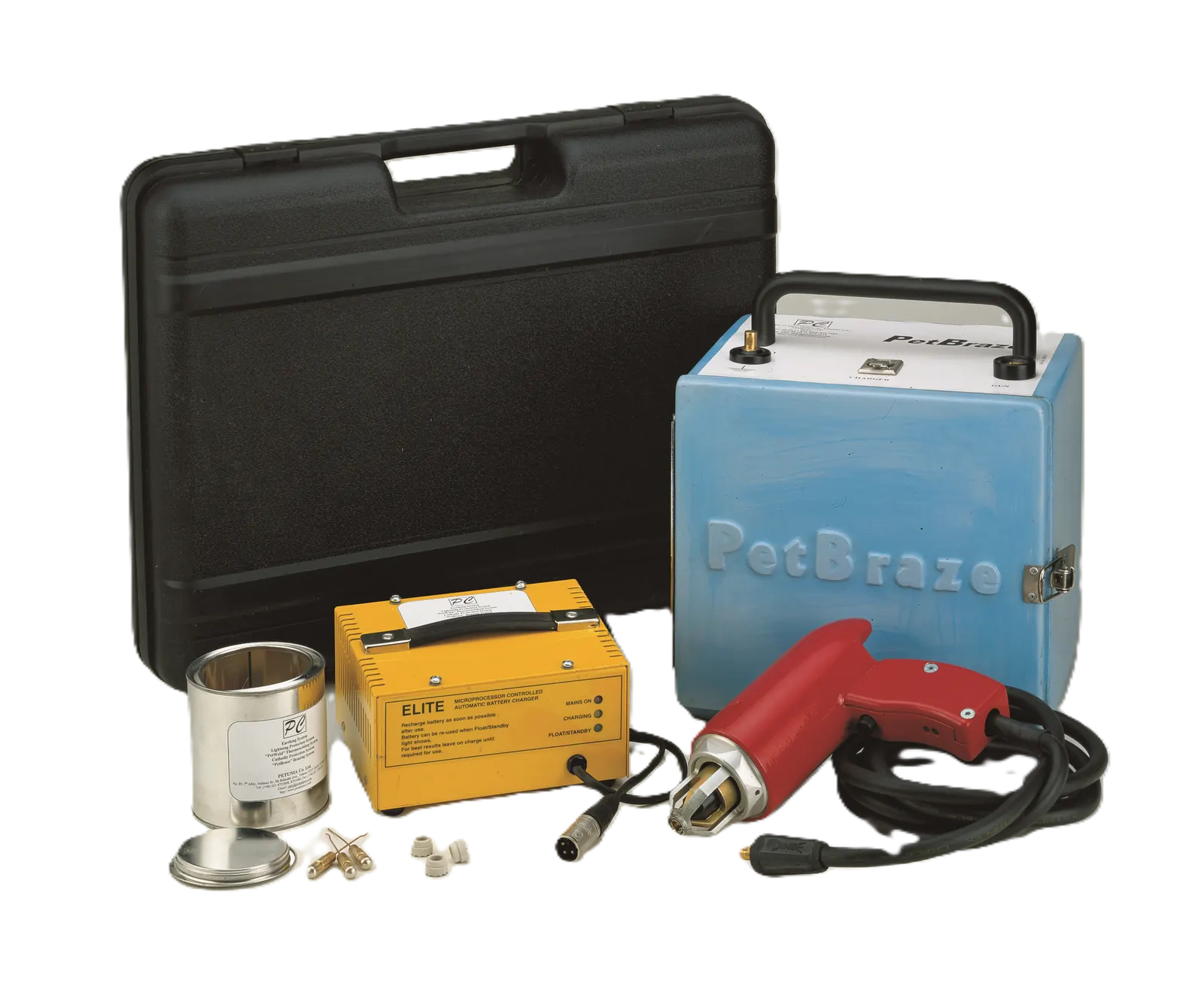
Pin brazing is another method for cable-to-structure connection, creating an easy and reliable metallurgical bond. Triggering the gun completes a DC circuit; the arc at the high-resistance pin tip melts the silver alloy and forms the weld. It is suitable for insulated pipe joints, test and negative cables, and sacrificial anode connections because of its speed, ease of use, and mechanical strength. The kit includes an arc generator with battery, pin brazing gun, and connectors such as lugs, pins, and ceramic washers.

pin brazing

Impressed Current Anode Backfill

According to IPS-M-TP-750, three types are used:

  • Metallurgical coke
  • Calcined petroleum coke
  • Special calcined petroleum coke

Types 1 and 2 are used for surface vertical or horizontal beds, while Type 3 is used for deep wells. They are classified by coke grain size and chemical composition.

back fill

Resin Joint

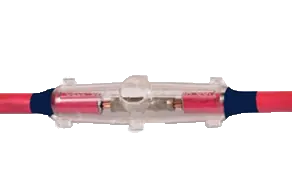
Resin joints are used to connect anode cables to header cables in shallow vertical or horizontal beds. Types per IPS-M-TP-750:

  • Straight-through
  • T-shaped
  • Y-shaped
Resin joint

Handy Cap

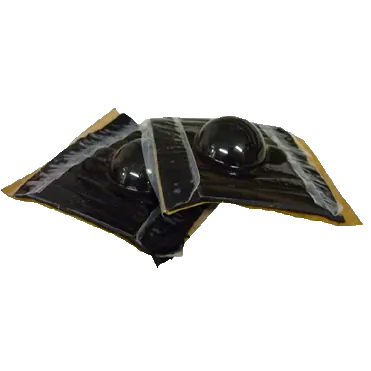
Handy Cap is a premade compound used to restore coating where a cable penetrates buried pipe insulation. It provides quick and easy application.

handy cap

Wrapping Tape

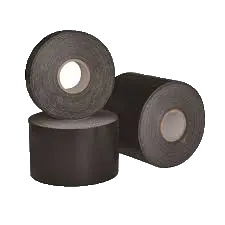
Wrapping tape is used to improve sealing around Handy Cap repair areas on pipelines and piping.

wrapping tape

Cathodic Protection Cables

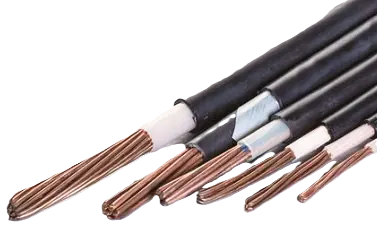
According to IPS-M-TP-750, CP cables use annealed copper conductors with single-strand, semi-flexible construction. Copper purity is specified by IEC and ASTM standards. Insulation must be chemically and physically resistant to the environment, have continuous dielectric strength, and resist abrasion and stress cracking. The standard voltage rating is 600/1000 V. Types include:

  • Cu/XLPE/PVC: Non-acidic, chloride-free (soil, fresh water)
  • Cu/XLPE/AWA/PVC: Same, high mechanical strength for direct burial
  • Cu/PVDF/HMWPE: Chloride/acidic environments, seawater, deep anode wells
Cable